If you love the Smokies but not the crowds, Townsend may be the place that catches your attention fast. This small Blount County town offers a calmer entry into the mountains, with river access, trail connections, and a lower-key pace than some of the region’s busier tourism centers. If you are thinking about a home, cabin, second property, or short-term rental opportunity here, it helps to understand what makes Townsend distinct. Let’s dive in.
Why Townsend stands out
Townsend is a small city in Blount County with 550 residents and about 2.0 square miles of land, based on the 2020 Census profile. Its size alone helps explain why the experience here feels more relaxed than in larger gateway markets.
The city is widely known as the "Peaceful Side of the Smokies," and that identity is reinforced by its planning goals. Townsend’s community plan focuses on protecting rural character, the Little River, and the tree canopy, while keeping most commercial uses concentrated along Highway 321/73.
That does not mean Townsend is isolated or inactive. It means the town has developed in a more measured way, with tourism still playing a major role but without the same high-energy resort-strip feel you may associate with other Smoky Mountain destinations.
A true gateway to the Smokies
Townsend is not just near the national park. It is one of Great Smoky Mountains National Park’s three main entrances, with access from US-321/TN-73 through town and into the park.
That location is a major reason buyers keep Townsend on their radar. If your ideal mountain property includes easy park access, scenic drives, and an outdoor-focused routine, Townsend offers a strong location fit.
The town is also one of the three main gateways to Cades Cove. For many buyers, that matters because Cades Cove is one of the Smokies’ most recognized destinations for historic sites, wildlife viewing, hiking access, picnicking, and camping.
What Cades Cove access adds
Cades Cove includes an 11-mile one-way loop road, hiking trails, historic homesites, a visitor center, campground, picnic area, and riding stable. If you picture your time in the mountains starting with early morning drives, trailheads, or afternoons exploring historic settings, Townsend puts that experience close at hand.
For second-home buyers and vacation-property shoppers, this kind of proximity can shape both personal enjoyment and guest appeal. Easy access to one of the area’s best-known natural attractions often becomes part of how a property is used and valued.
The lifestyle centers on river and trail access
One of Townsend’s strongest lifestyle draws is the Little River. The river helps define the character of the town and adds a more natural, laid-back feel to daily life.
The Townsend River Walk & Arboretum is a good example. It runs along the Little River and includes trail maps, river views, and the Bluebell Trail, giving both residents and visitors a simple way to enjoy the landscape without needing a full-day outing.
The Townsend Visitor Center adds another layer to that experience with 10 acres of green space, local artisan demonstrations, and travel information tied to the area’s identity. Together, these amenities support a lifestyle that feels scenic, walkable in pockets, and closely connected to the outdoors.
Townsend’s commercial feel is small-scale
If you are comparing Townsend with busier Smoky Mountain markets, the local business mix is important to understand. Townsend has a tourism-oriented commercial base, but it remains smaller in scale.
The city’s business directory includes cafes, coffee shops, restaurants, lodging, cabin rentals, campgrounds, outfitters, galleries, a distillery, a grocery store, a bank, a post office, a vet clinic, a laundromat, and museum or event venues. That mix supports day-to-day needs and visitor activity without creating an oversized commercial corridor.
For many buyers, this is part of the appeal. You get useful local services and tourism infrastructure, but the overall environment still reads as a mountain town rather than a dense entertainment district.
A town shaped by history
Townsend’s history also helps explain its character today. The city says it was chartered in 1921 by people connected to the Little River Railroad and Lumber Company, and later shifted from a logging settlement into a tourism hub after the national park era began.
That transition left a visible mark on the built environment. Rather than a uniform pattern of newer subdivisions, Townsend reflects layers of history tied to settlement, industry, and visitor-oriented growth.
Local attractions support year-round interest
Townsend may be quieter, but it is not lacking in places to explore. The Great Smoky Mountains Heritage Center focuses on Townsend, Cades Cove, and Smoky Mountain history through a museum, historic village, events, and educational programs.
Tuckaleechee Caverns is another long-running attraction in town. These destinations help give Townsend a steady cultural and tourism presence that goes beyond simple pass-through traffic on the way to the park.
For property owners, that matters. A town with recognizable attractions, outdoor access, and a clear identity often has broader appeal to visitors, second-home shoppers, and buyers looking for a place that feels established rather than generic.
What housing looks like in Townsend
Townsend’s housing patterns are not especially dense, and that is an important part of the market story. The community plan says residential areas are dominated by single-family homes, with no meaningful expansion of duplexes, multifamily housing, or mobile-home districts.
The same plan notes that subsurface sewage systems require larger lots and limit denser development. It also says many vacant parcels face constraints such as steep slopes, flood-prone areas, or conservation easements.
In practical terms, that means the local housing supply may feel more limited and more varied than buyers expect. It can also mean that lot characteristics and site usability deserve close attention during your search.
Expect variety, not sameness
Townsend’s cultural-resource inventory points to a mixed-age built environment that includes early settlement resources, Little River Lumber Company-era structures, and a larger group of tourism-era properties. Many of those tourism-era resources are residential buildings, while others are overnight-lodging properties.
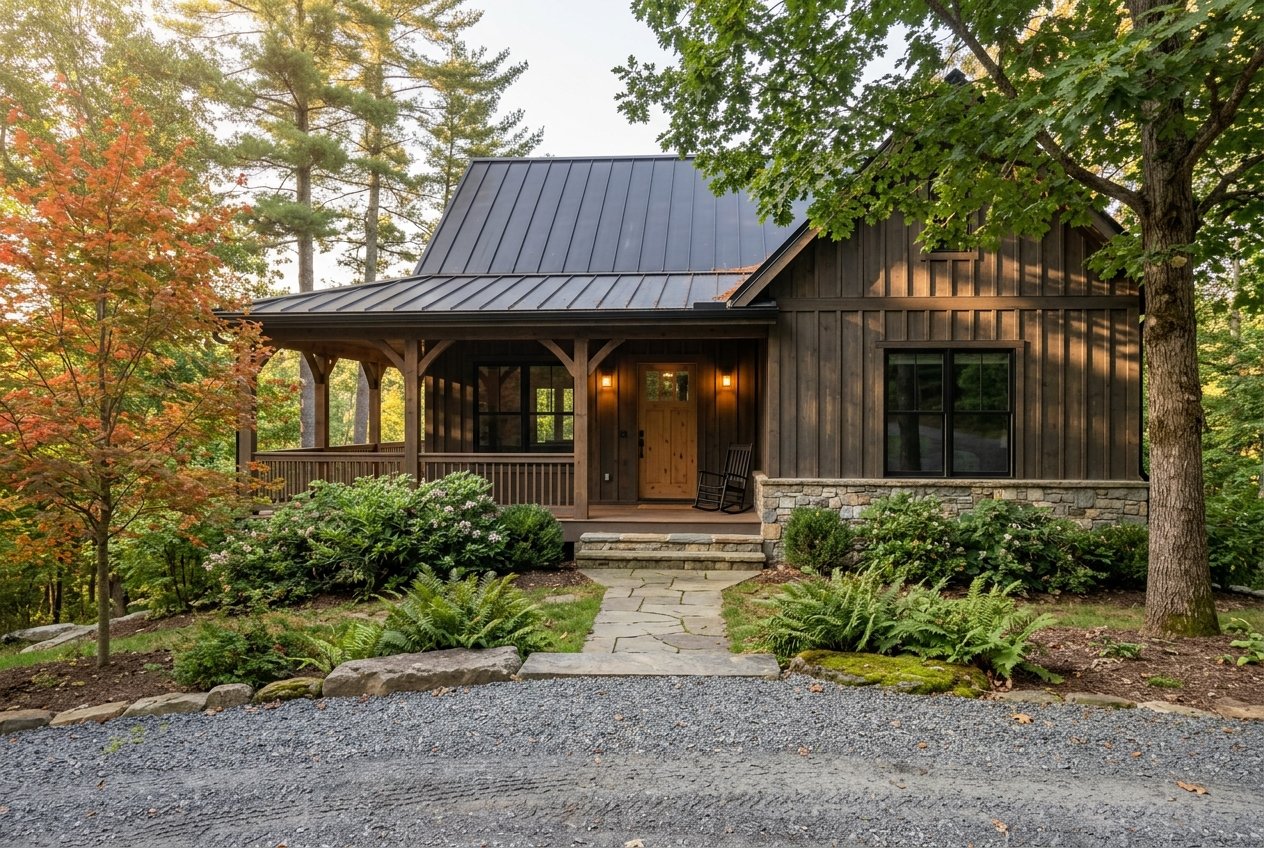
For you as a buyer, that often translates into a mix of older homes, cabin-style properties, and lodging-oriented real estate. You are less likely to see a one-style-fits-all subdivision pattern and more likely to encounter homes with distinct settings, layouts, and use cases.
Who Townsend may fit best
Townsend tends to appeal to buyers who want the Smokies without the constant pace of a more crowded tourism center. If you value park access, river and trail amenities, and a quieter mountain setting, the town may align well with your goals.
This can make Townsend a strong option for:
- Second-home buyers who want a mountain retreat
- Primary residents looking for a lower-intensity setting
- Short-term-rental buyers drawn to park access and small-town atmosphere
- Buyers who prefer a more natural setting over dense retail and nightlife
That said, fit matters. If your priority is heavy entertainment, nonstop activity, or a more built-up visitor district, Townsend may feel too quiet for what you have in mind.
What STR buyers should know
Townsend can attract short-term-rental interest because of its location, outdoor access, and visitor appeal. But if you are looking at a property with rental use in mind, it is important to account for local compliance requirements during due diligence.
The city has a short-term-rentals section and occupancy-tax paperwork on its website, which signals an added local compliance layer. That does not mean every property will work the same way for STR use, so careful property-level review matters.
For out-of-town buyers especially, this is where local guidance can be valuable. It helps to evaluate not just the cabin feel or the map location, but also accessibility, use constraints, property condition, and how well the home matches what guests actually seek in this part of the Smokies.
Why Townsend deserves a closer look
Townsend offers something increasingly hard to find in a major mountain tourism region: a gateway location with a calmer tone. You still get access to the national park, Cades Cove, river spaces, trails, and local attractions, but in a town shaped more by rural character and small-scale development than by nonstop commercial intensity.
For the right buyer, that mix can be a real advantage. Whether you are searching for a personal retreat, a full-time home, or a property that blends lifestyle value with income potential, Townsend is worth exploring with a clear understanding of how the market actually works.
If you want help evaluating homes, cabins, second homes, or short-term-rental opportunities in Townsend and the Smoky Mountains, Karen Cubberley can help you buy with more clarity and confidence.
FAQs
What makes Townsend, Tennessee different from other Smoky Mountain towns?
- Townsend is known for a quieter, lower-density feel, with commercial activity centered mostly along Highway 321/73 and strong emphasis on rural character, river access, and the forested landscape.
Is Townsend, Tennessee a main entrance to Great Smoky Mountains National Park?
- Yes. The National Park Service lists Townsend as one of the park’s three main entrances, with access through town into the national park.
What outdoor features define the Townsend, Tennessee lifestyle?
- The lifestyle is strongly tied to the Little River, the Townsend River Walk & Arboretum, nearby trails, and easy access to Cades Cove and Great Smoky Mountains National Park.
What kinds of homes are common in Townsend, Tennessee?
- Townsend is dominated by single-family homes, and buyers often find a mix of older homes, cabin-style properties, and lodging-oriented real estate rather than dense subdivision development.
Is Townsend, Tennessee a good fit for short-term rental buyers?
- Townsend may appeal to STR-minded buyers because of its park access and visitor draw, but buyers should also expect a local compliance process and should review each property carefully during due diligence.
Who is the ideal buyer for Townsend, Tennessee real estate?
- Townsend may be a strong fit if you want a quieter mountain setting, outdoor access, and a small-town atmosphere, especially if you are considering a second home, cabin, primary residence, or vacation-use property.